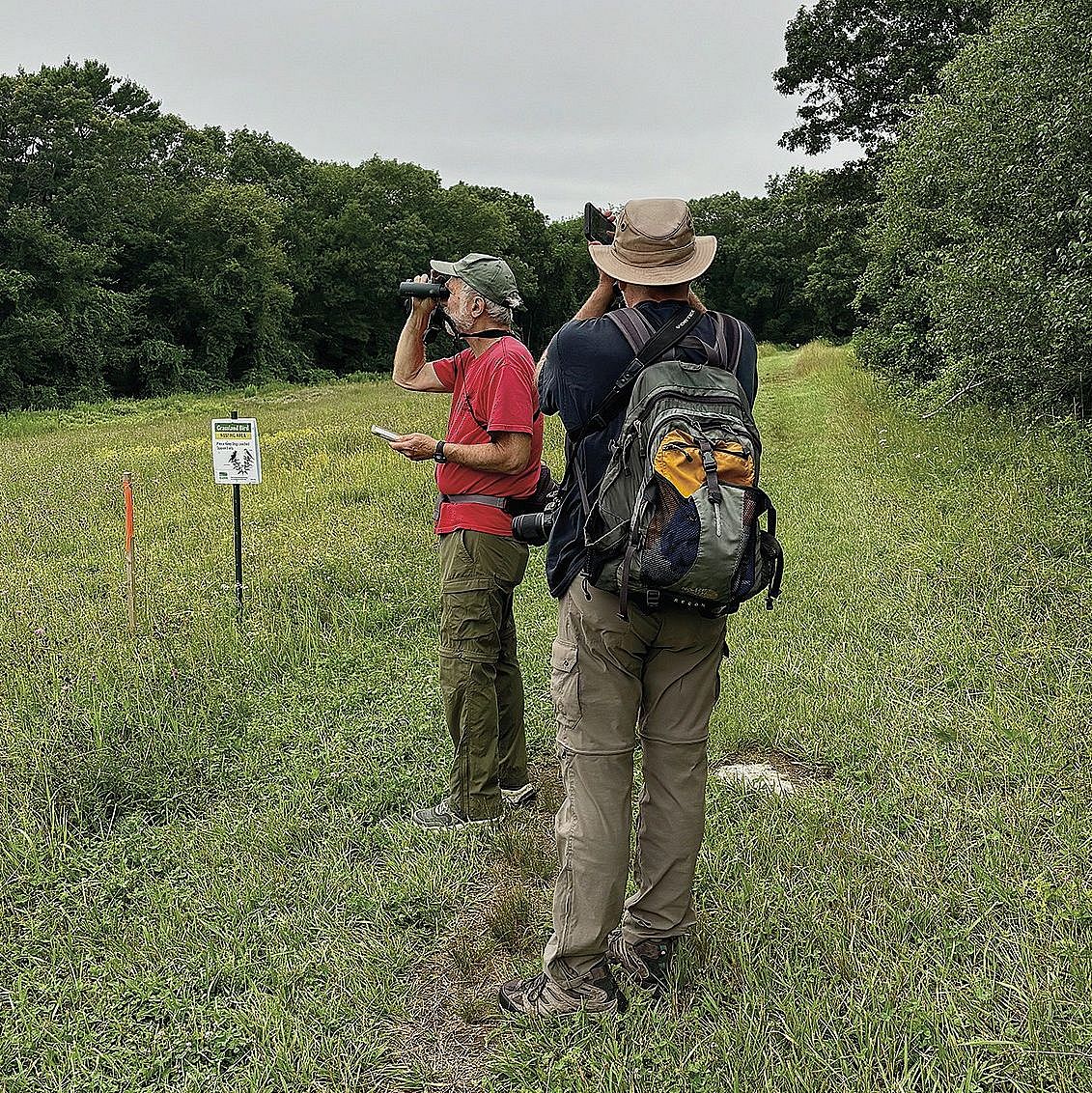
During the months of June and July, a small group of volunteer citizen scientists, working in collaboration with Greenbelt’s Stewardship team, monitors grassland bird activity at Cox Reservation (Essex), Donovan Fields (Hamilton), Castle Neck River Reservation (Ipswich), and Kamon Farm (Ipswich). The baseline data they collect helps inform property management decisions designed to protect fragile grassland habitats during the critical nesting season.
“Grassland birds are not endangered, but they are highly vulnerable, with many species experiencing significant population declines,” says Abby Hardy-Moss, Vice President of Stewardship, Planning, and Technology. The primary contributor to this decline, she adds, is the loss of grassland habitat due to agricultural expansion, urban development, and changes in land management practices.
Started as a pilot initiative three years ago, the Grassland Bird Monitoring Program was formalized last year and builds on Greenbelt’s longstanding efforts to restore and manage grassland habitat. Stewardship activities include removing fencing, controlling invasive plants, and addressing other factors that can disrupt nesting and breeding behaviors — helping ensure these vulnerable species have the best chance to thrive. At certain times of year, visitors to Greenbelt properties will also see signage posted asking that dogs be leashed to help protect nesting birds, which is another essential step in protecting grassland bird habitat.
As part of the monitoring program, volunteers use a customized app developed by Greenbelt’s GIS team to collect data in real time, following a protocol that designates specific locations on each property for monitoring. On a coordinated schedule, they record detailed observations, including the number of birds, species, sex, and age whenever possible. Their primary focus is on monitoring Bobolinks, Eastern Meadowlarks, and Grasshopper Sparrows.
“This program not only engages volunteers in hands-on conservation work but also provides valuable data for science and land management,” says Abby. “As it grows, we hope to expand monitoring to new sites and involve more volunteers, which will help us proactively adapt our property management strategies to better support grassland birds in the future.”
Grassland Bird Monitoring Program Focuses on Collecting Data, Protecting Habitats
Posted Wednesday, June 3, 2026
—
News