
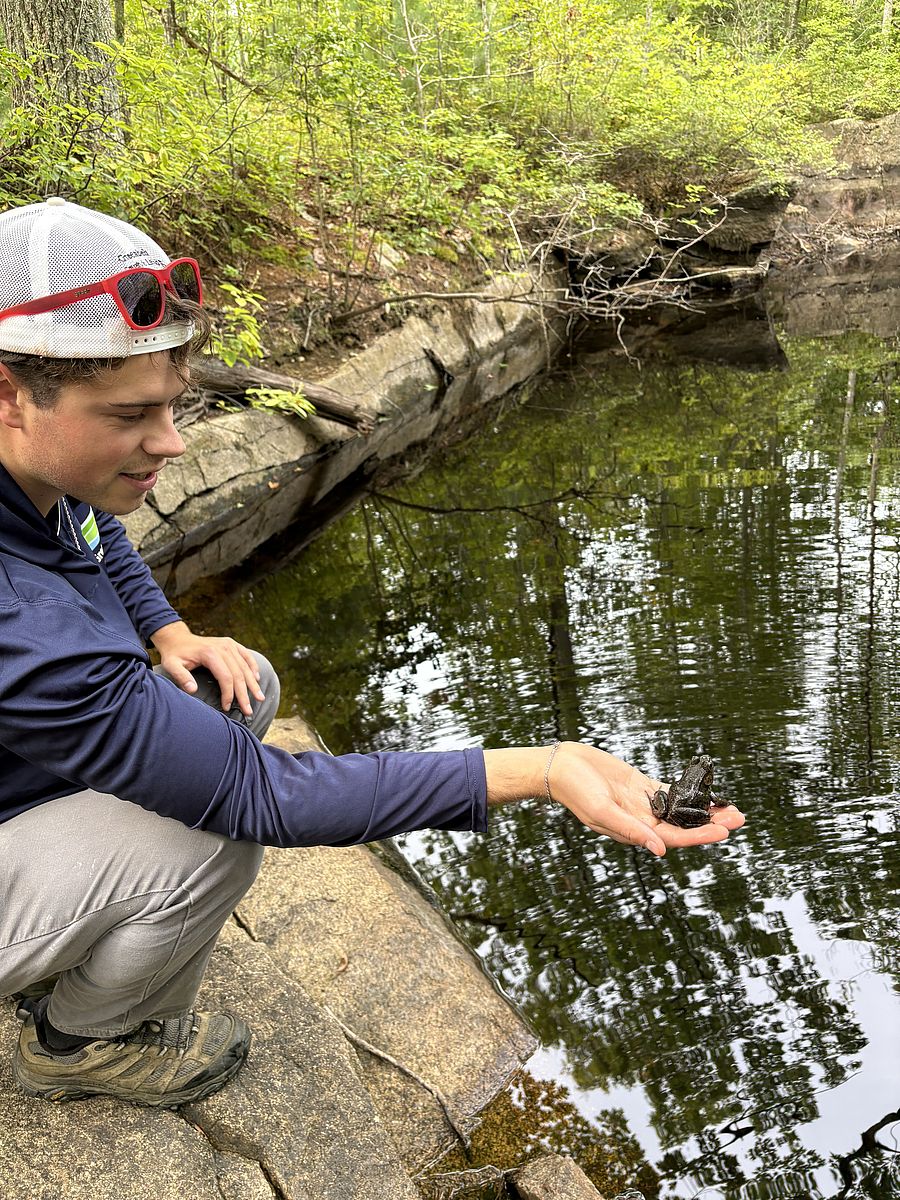
This past spring, as the ground began to thaw, Owen Hardy of Greenbelt’s Stewardship team spent a half-dozen cool, rainy nights standing along roadsides in Gloucester and Essex. Equipped with a headlamp, flashlight, and reflective vest, his goal was to help migrating frogs, salamanders, and other amphibians avoid an unfortunate fate as they made their way to nearby wetland breeding sites. He also collected data on the number and types of species he encountered.
“Amphibians are an important part of the broader ecosystem, both in their own right and as a food source for other wildlife,” says Owen, who spent about an hour at each of three locations. He hopes to expand this pilot initiative into a more formal program next year by enlisting volunteers to help monitor migration routes near vernal pools, ponds, and wetlands on or adjacent to select Greenbelt properties.
Making Informed Decisions
“Owen proactively started this initiative based on his own interest in amphibians — frogs in particular — but it aligns well with our broader efforts to protect habitats that support a wide range of wildlife,” says Abby Hardy-Moss, Vice President of Stewardship, Planning, and Strategy.
As with Greenbelt’s Osprey and grassland bird monitoring programs, she adds, the data collected over time can help inform stewardship and land management decisions. The findings can also be shared with state agencies and conservation partners to support regional habitat protection efforts.
Known as “Big Night,” the seasonal migration of amphibians can unfold over several days or even weeks, depending on weather conditions. This phenomenon occurs each spring when warming temperatures and rainy evenings rouse dormant frogs, toads, and salamanders from their winter brumation — a hibernation-like period of inactivity — prompting their journey to breeding grounds.
“I find taking an active, hands-on role in the survival of amphibians to be very rewarding in a literal sense — you’re saving a life,” says Owen. “We’ve all seen stretches of road where frogs and salamanders didn’t make it. Helping even a few cross safely can make a real difference.”
Owen also sees a volunteer monitoring program as an opportunity to educate people about the role of amphibians in the ecosystem and their unique life cycles while encouraging greater driver awareness during critical breeding periods.
If you are interested in participating in this initiative next year, sign up to volunteer with Greenbelt here. Current Greenbelt volunteers should contact John Turvey, Volunteer Program Coordinator, for more information.